Khurja: six hundred years of pottery, and the pieces on our shelves
How a small town in Uttar Pradesh became India's ceramic city, how a Khurja bowl is made and painted by hand, and why our pieces come from there.
Almost every piece on our shelves began in one town: Khurja, in the Bulandshahr district of Uttar Pradesh, a couple of hours southeast of Delhi. People there have been making pottery for around six hundred years. It’s often called India’s ceramic city, and it has earned the name.
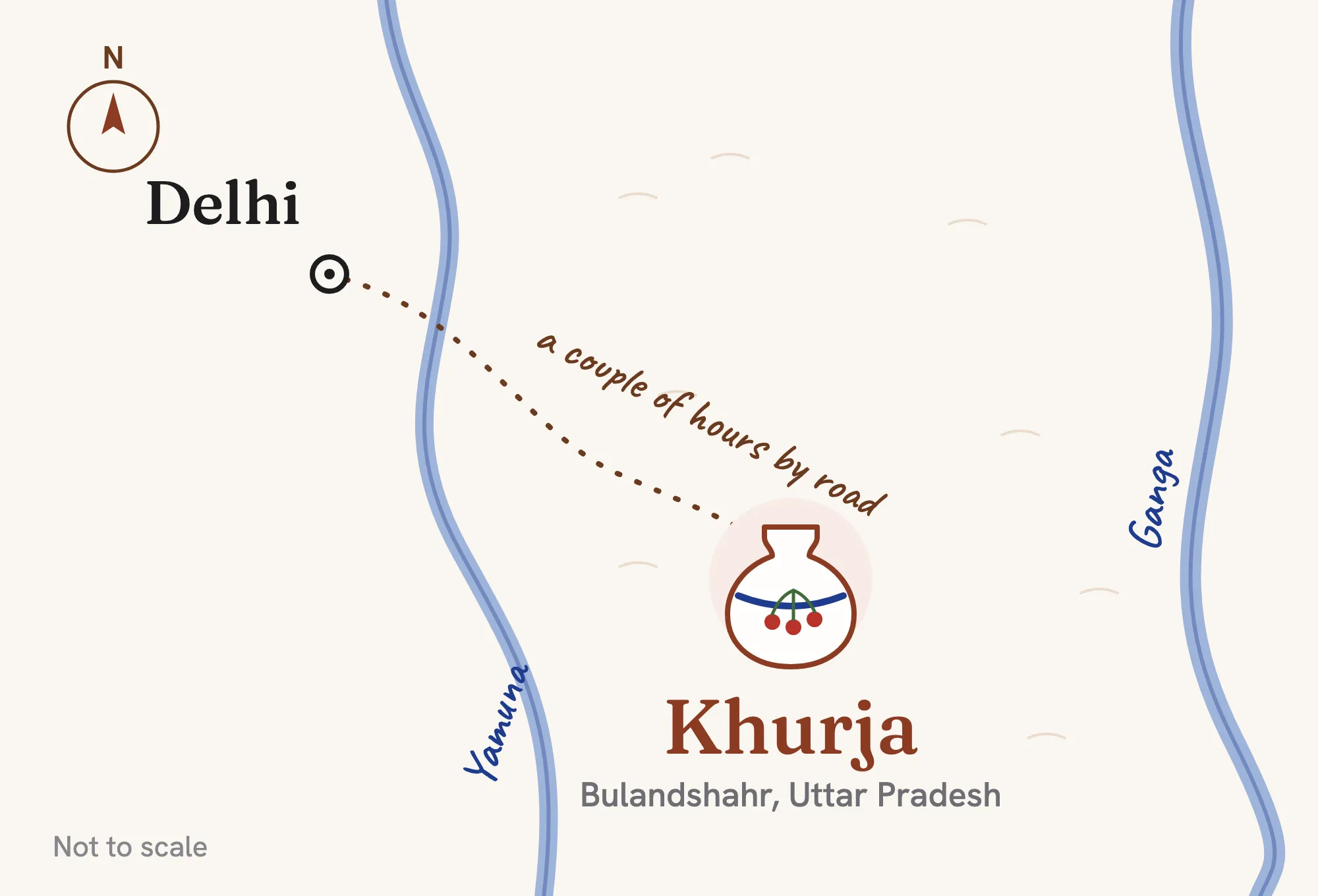 Khurja sits in the plains between the Yamuna and the Ganga.
A craft that arrived with travellers
Nobody is quite sure how pottery came to Khurja, and the town tells more than one story.
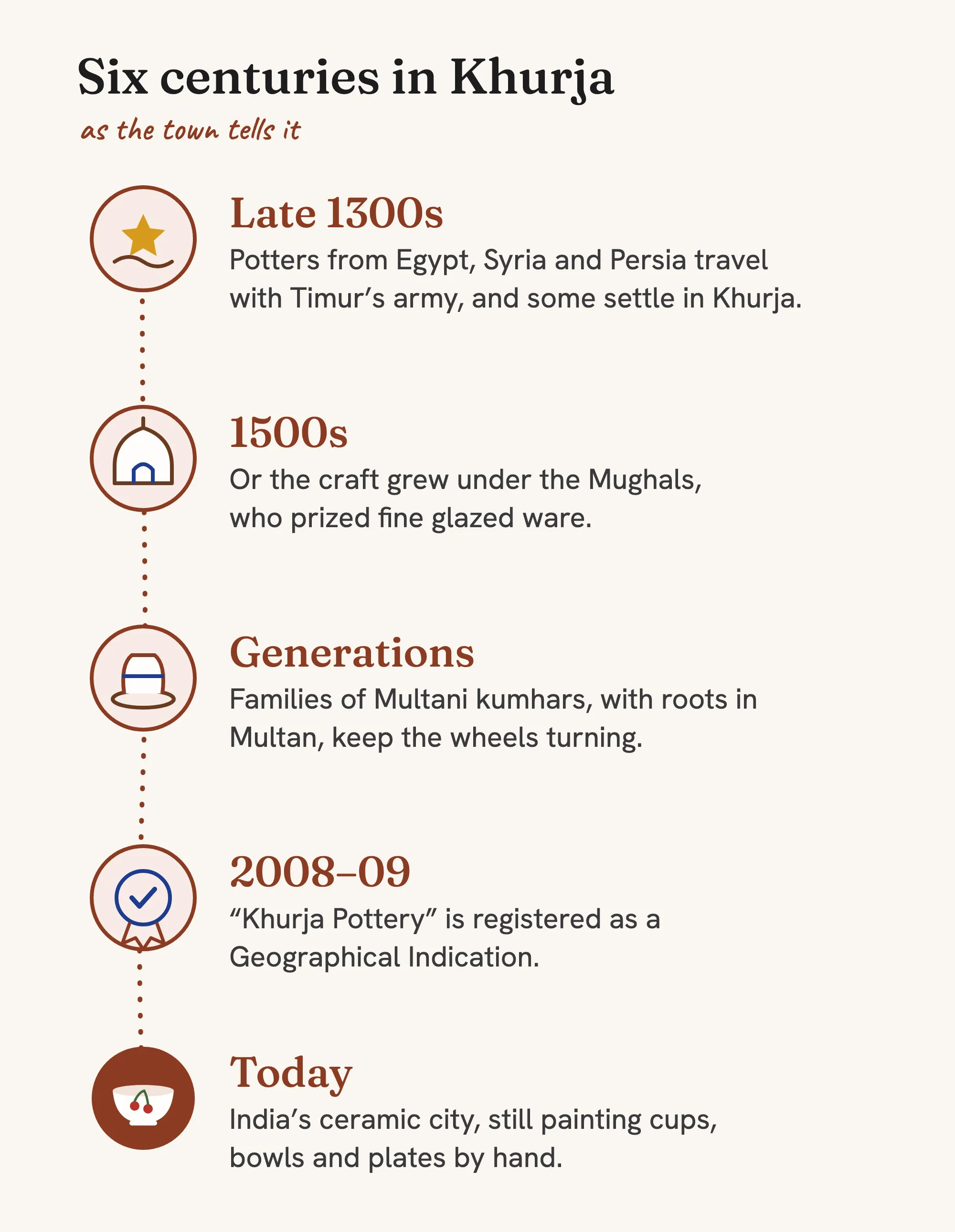
The one you hear most often goes back to the late fourteenth century. It says potters from Egypt, Syria and Persia travelled into north India with Timur’s army, and some of them settled in Khurja. Another says the craft grew under the Mughals, who valued fine glazed ware. Some potter families in the town still call themselves Multani kumhars, which points to roots in Multan, further west.
It may be that all three are partly true. Whichever it was, the potters brought glazing and decorating skills from Central Asia and Persia, and over the centuries these mixed with Indian shapes and patterns into something that belongs to Khurja alone.
India’s ceramic city
Today Khurja is still full of workshops and small factories, many of them run by families who have made pottery for generations. They make everything from teacups and dinner plates to planters and tiles.
In 2008–09, Khurja Pottery was registered as a Geographical Indication under India’s GI Act. Like Darjeeling tea or Kanchipuram silk, only pottery actually made there can carry the name.
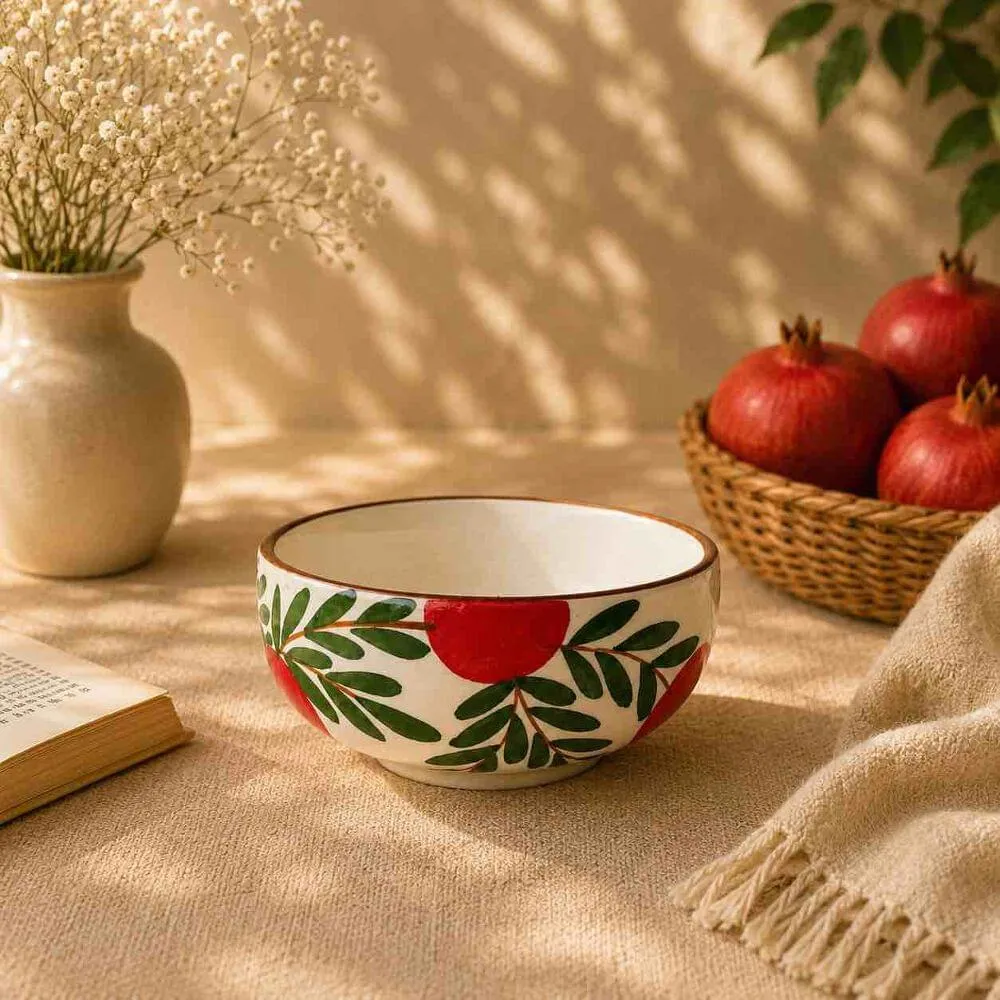
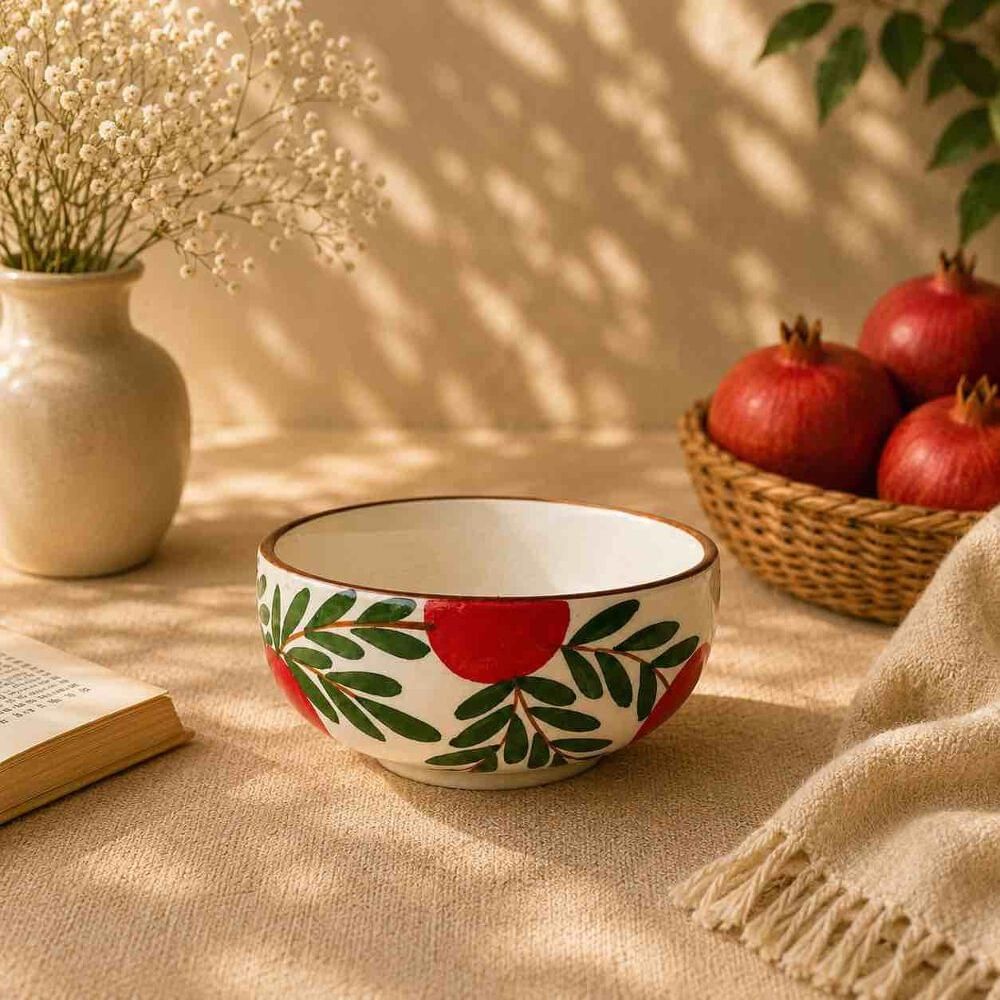
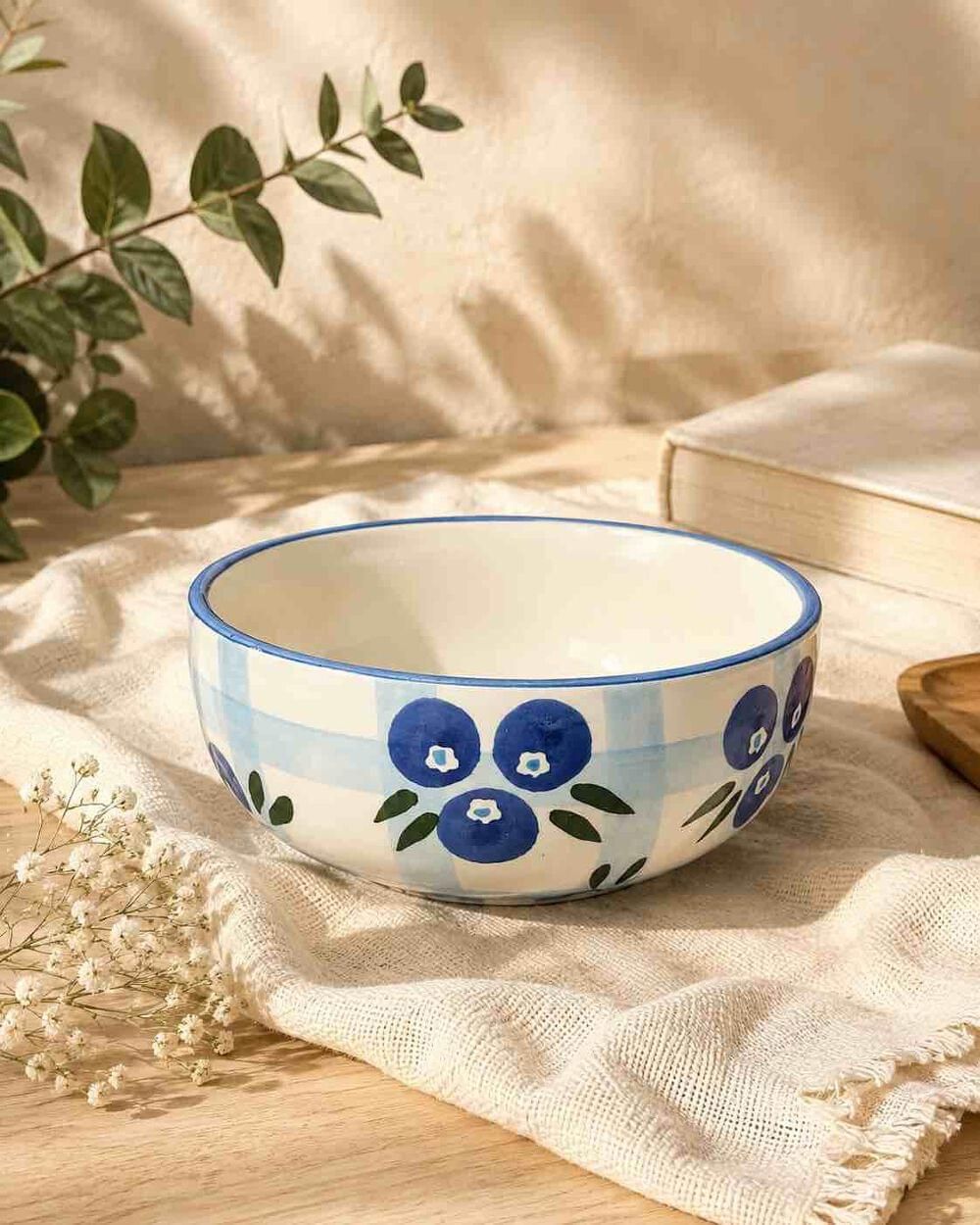
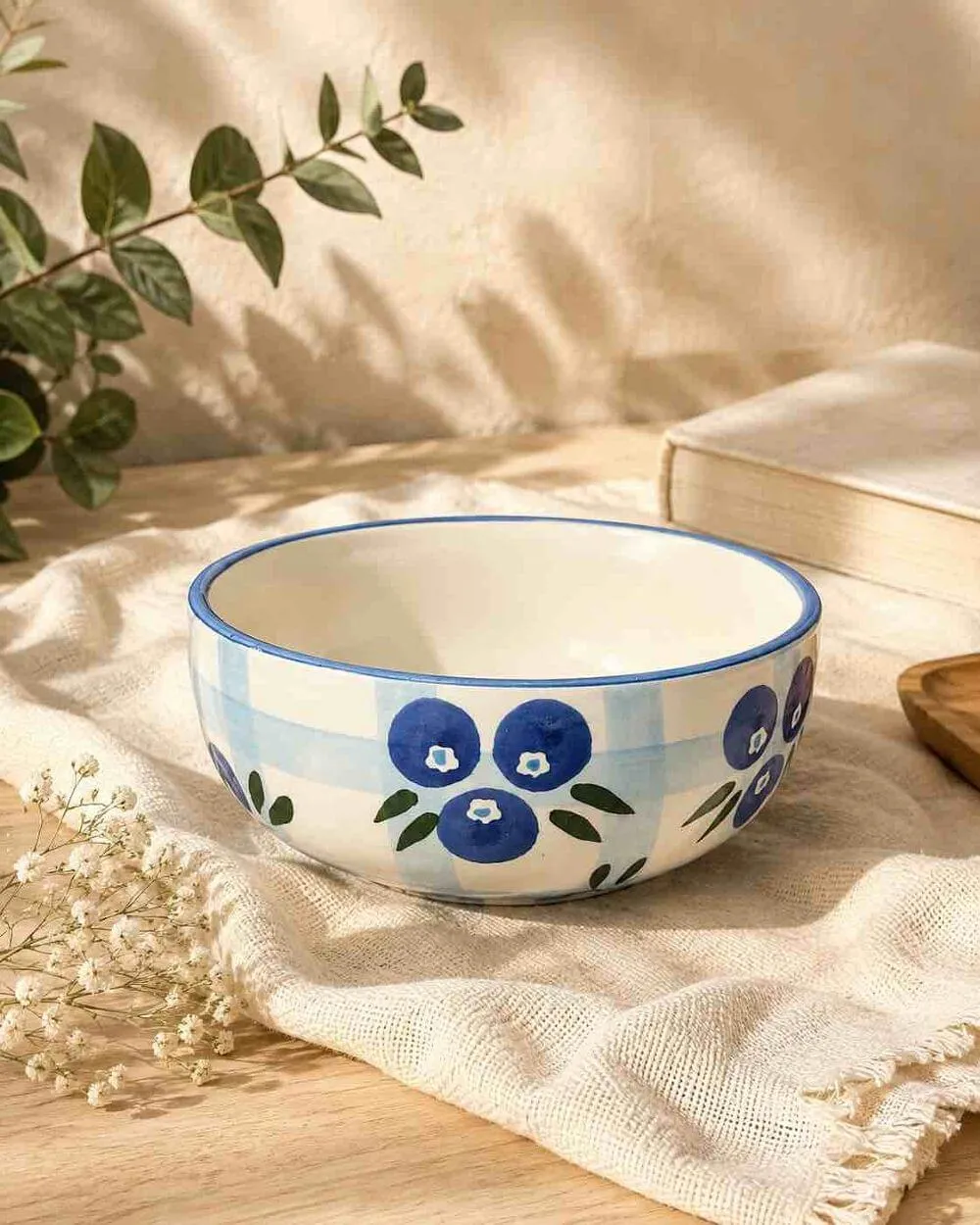 Made in Khurja, on our shelves in Bengaluru: the Pomegranate Vine and Blueberry Gingham bowls.
How a Khurja bowl is made
The details differ from workshop to workshop, but a piece goes through much the same steps:
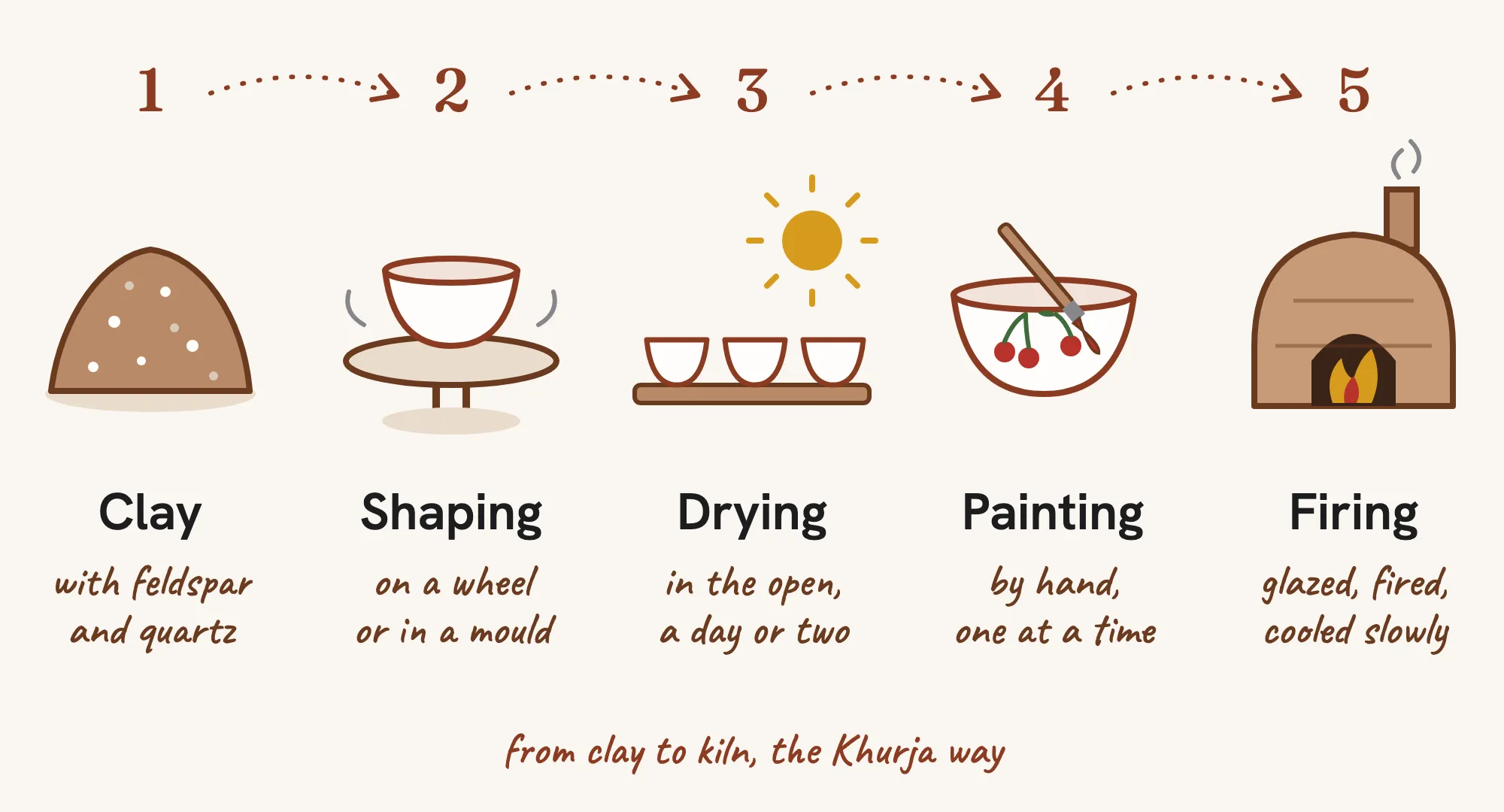
- The clay. The body is not plain clay. It’s clay mixed with minerals such as feldspar and quartz, which makes the finished piece strong and helps the glaze take.
- Shaping. Pieces are thrown on a wheel, built by hand, or cast in moulds, which is how a set of bowls comes out the same size.
- Drying. The shaped pieces dry in the open for a day or two before anything else touches them.
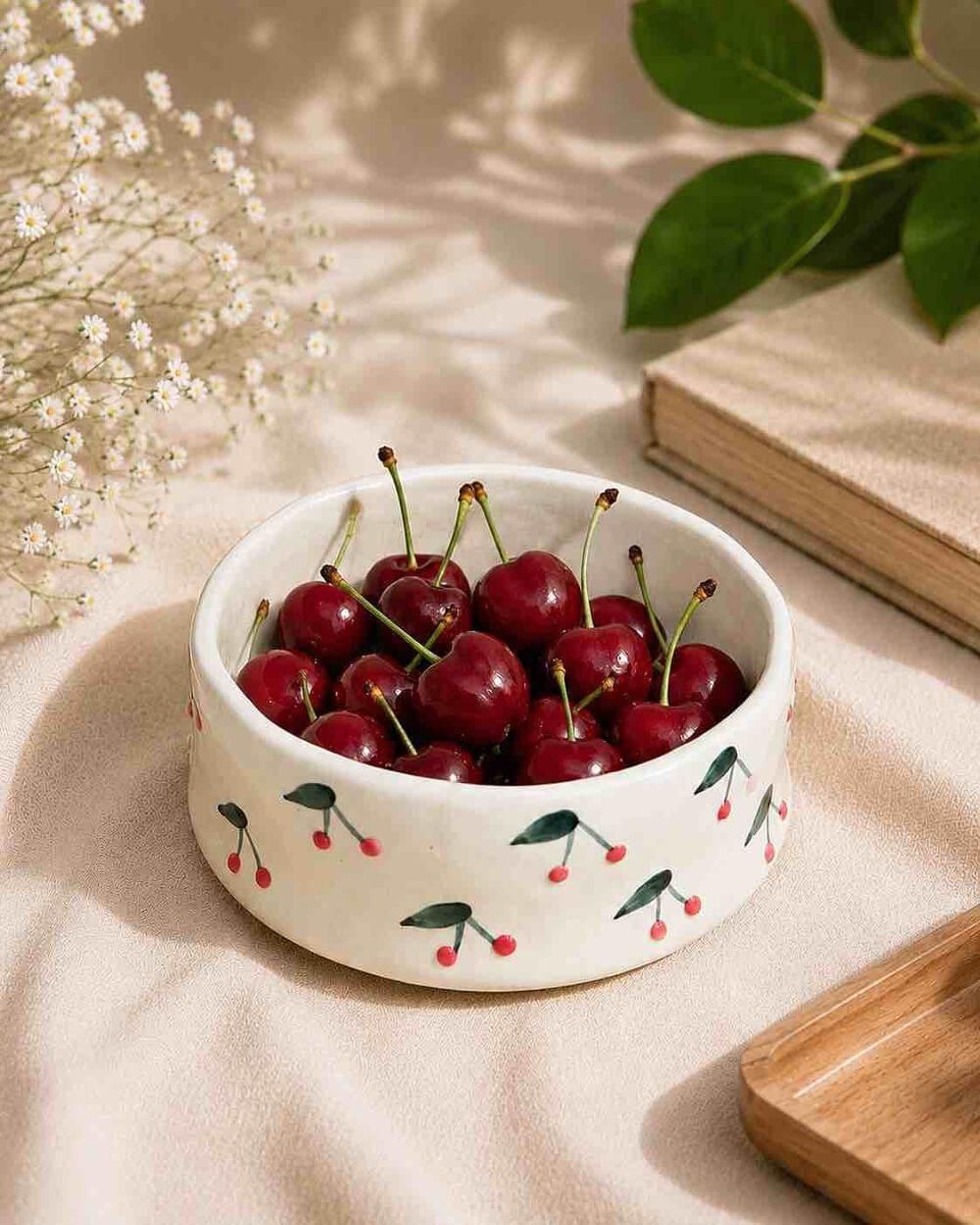
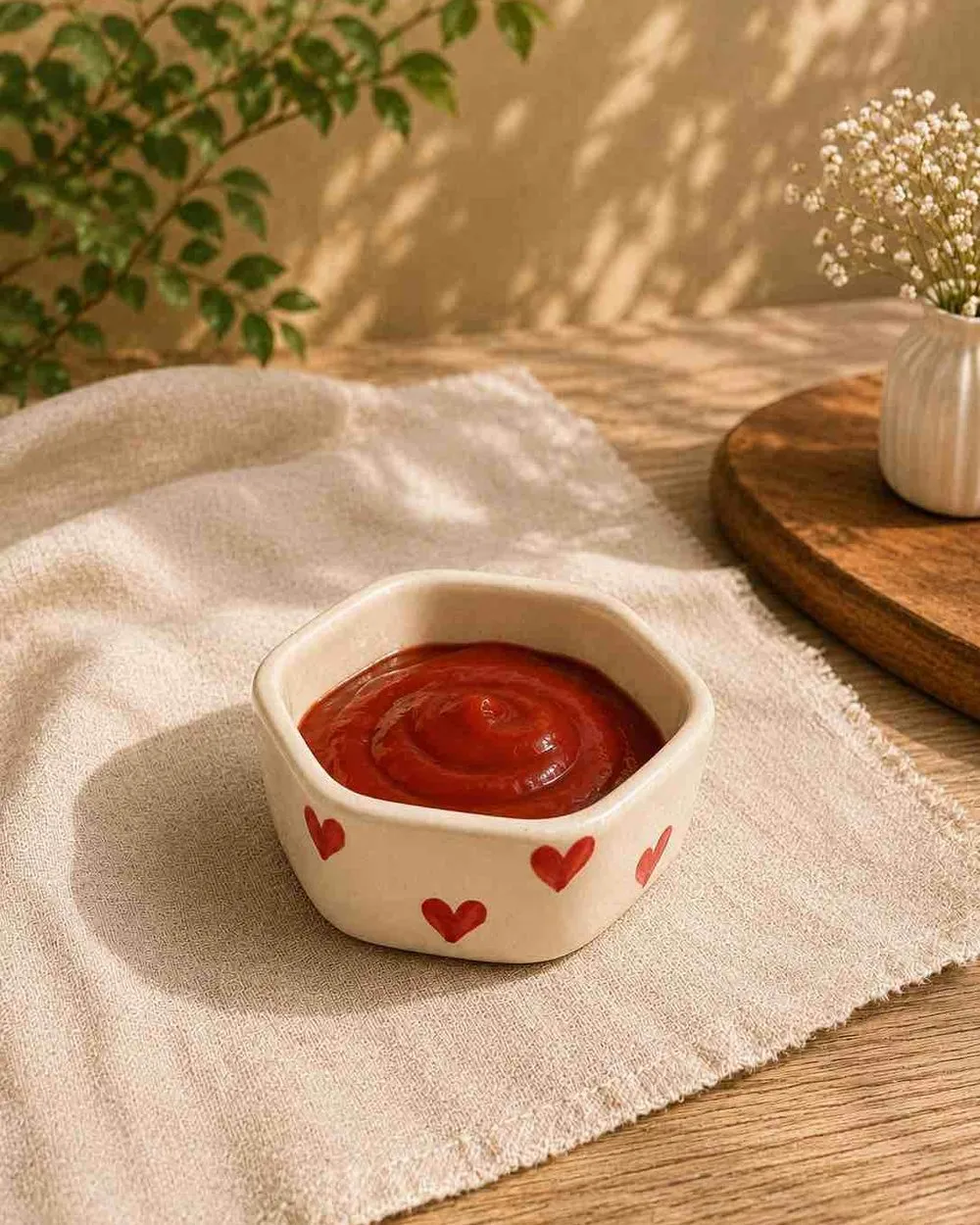
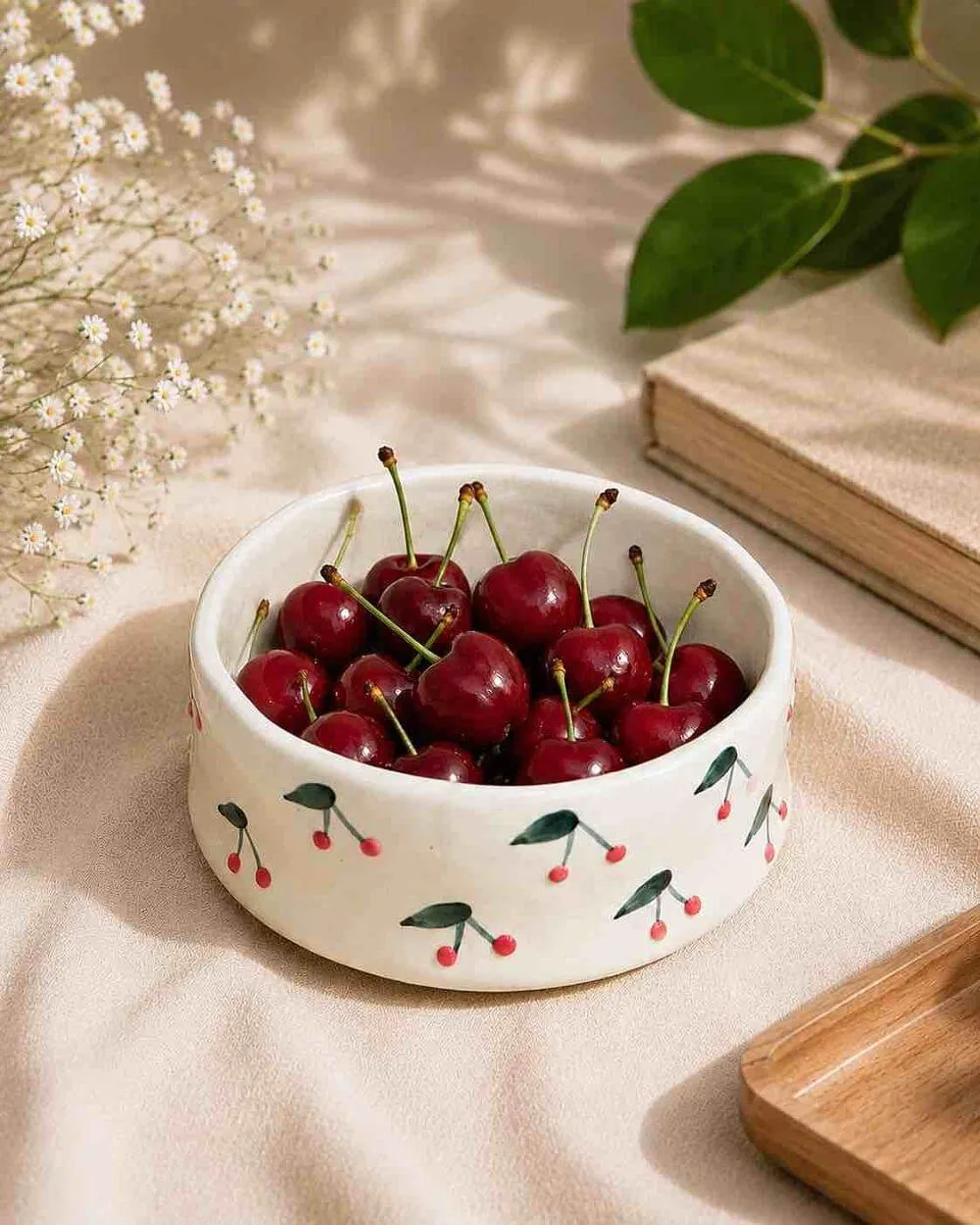
- Painting. This is the part we fell for. Cherries, blueberries, stripes and hearts are painted on by hand, one piece at a time, with a brush.
- Glazing and firing. The painted piece is glazed and fired in a kiln, then left to cool slowly so it doesn’t crack. The glaze seals the painting under a glassy, wipe-clean surface.
Because the painting is done by hand, no two pieces are quite identical. A stripe sits a little wider, and a cherry leans a little further.
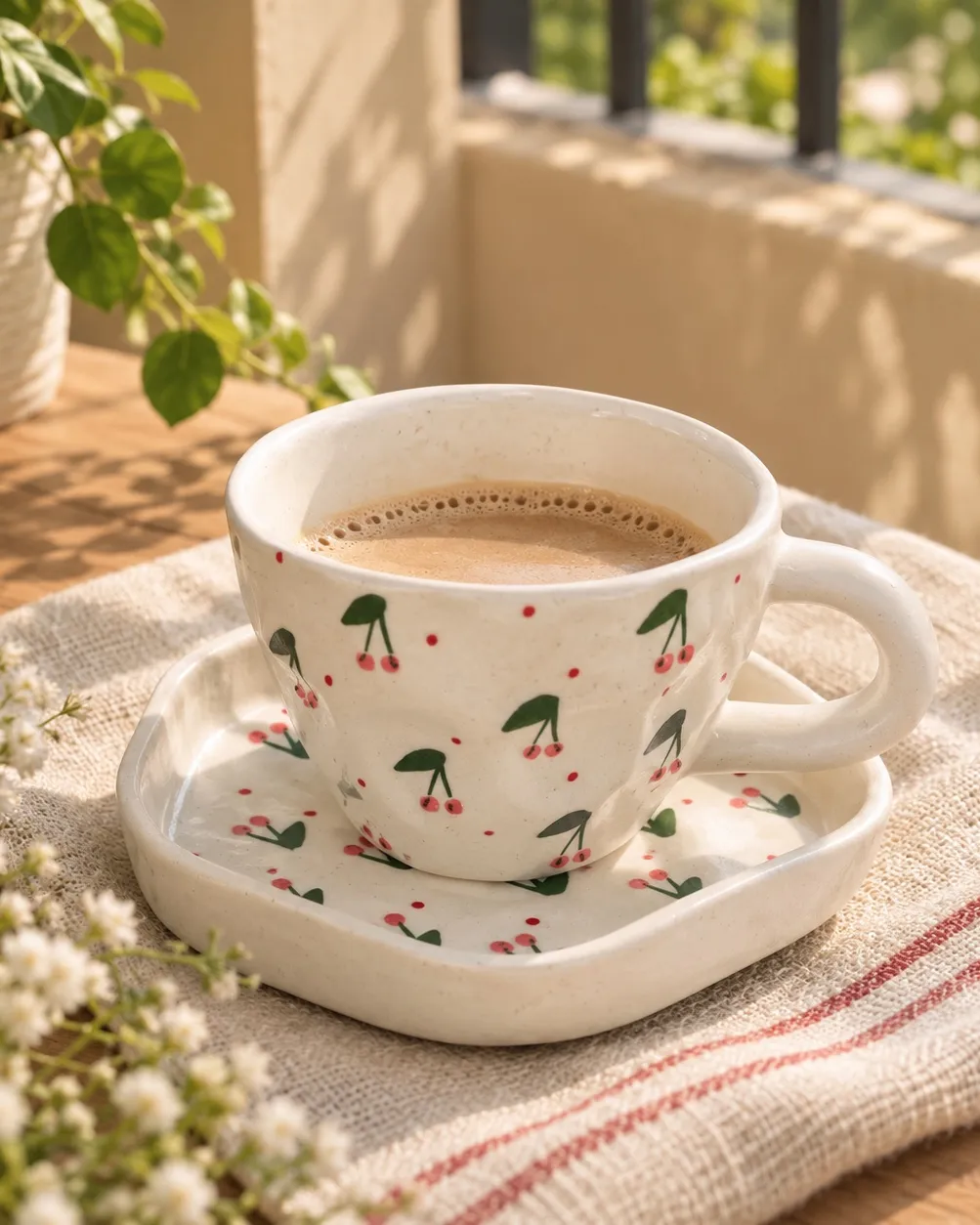
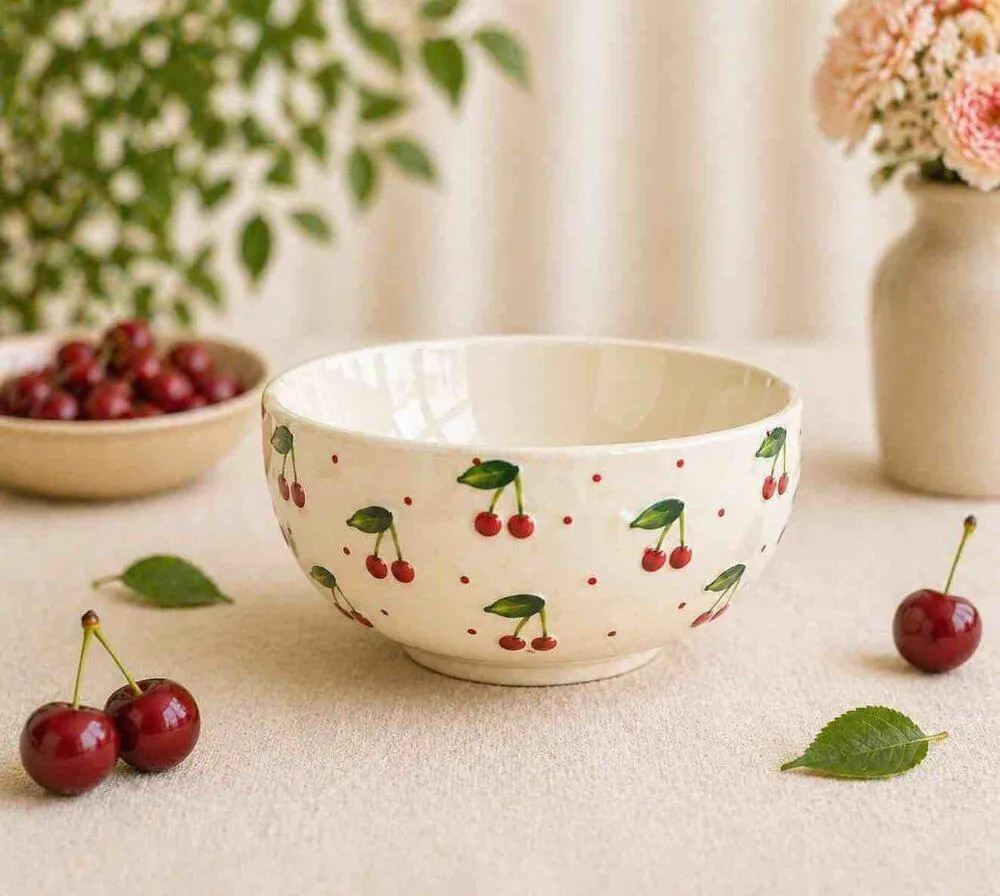 Cherries on a cup and on a bowl, and no two drawn quite the same.
Why our pieces come from Khurja
We don’t make or paint anything ourselves. We’re a two-person team in Bengaluru, and our job is choosing. We pick finished pieces from Khurja makers whose painting we love, and bring them to tables here.
Most of the pieces in our shop are painted by hand in Khurja. A small number of designs are decorated another way, and if you’d like to know which is which, just ask us on WhatsApp.
That hand-painting is also why your bowl may not match the photo exactly. The painter’s hand moves a little differently each time. We think that’s the best part of a piece that someone actually made.
Look closely
Next time you pick up one of our bowls, look at the brushstrokes: where the paint pooled at the end of a stroke, or where a cherry stem was drawn in a single flick. That’s six hundred years of Khurja, on your kitchen table.
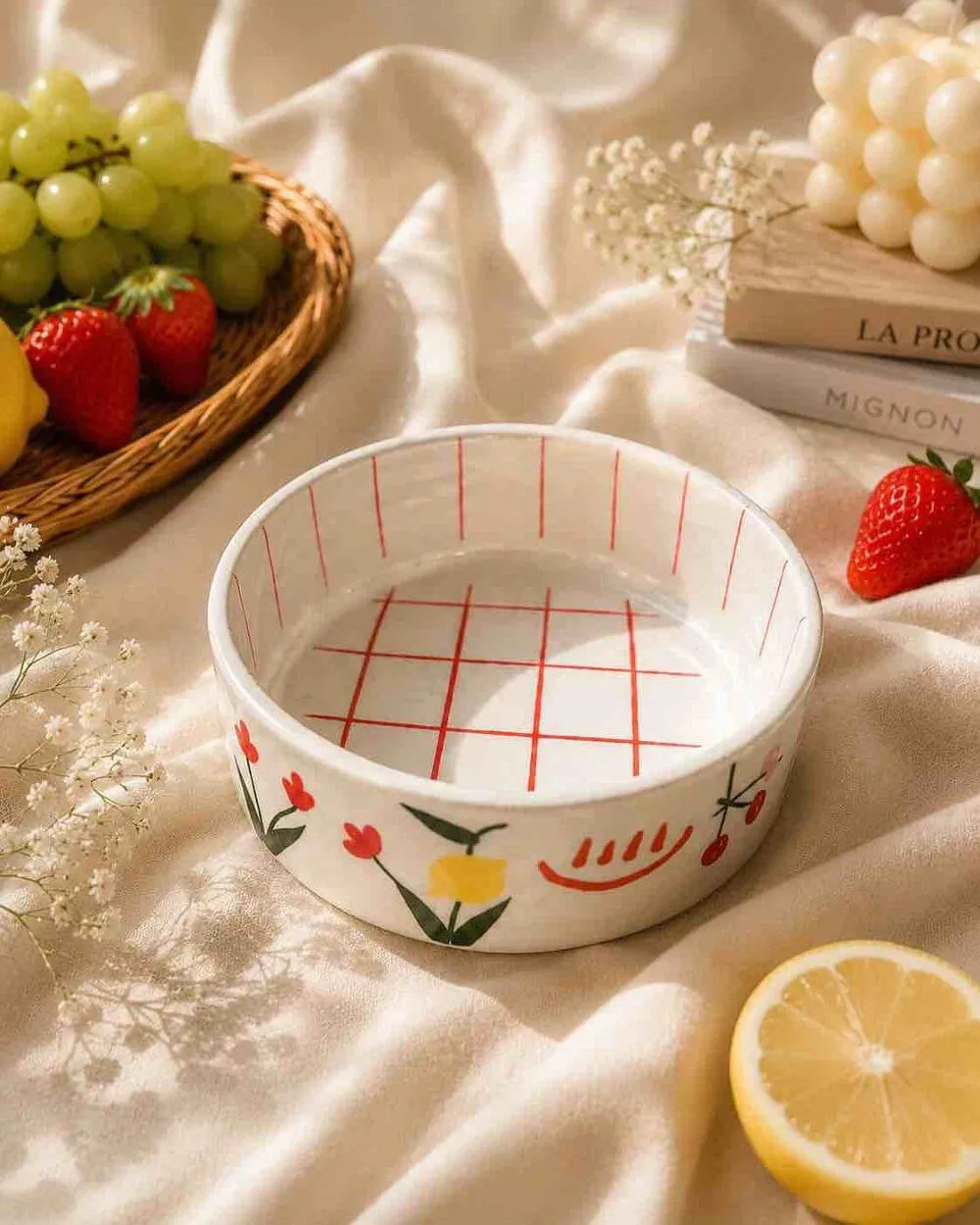
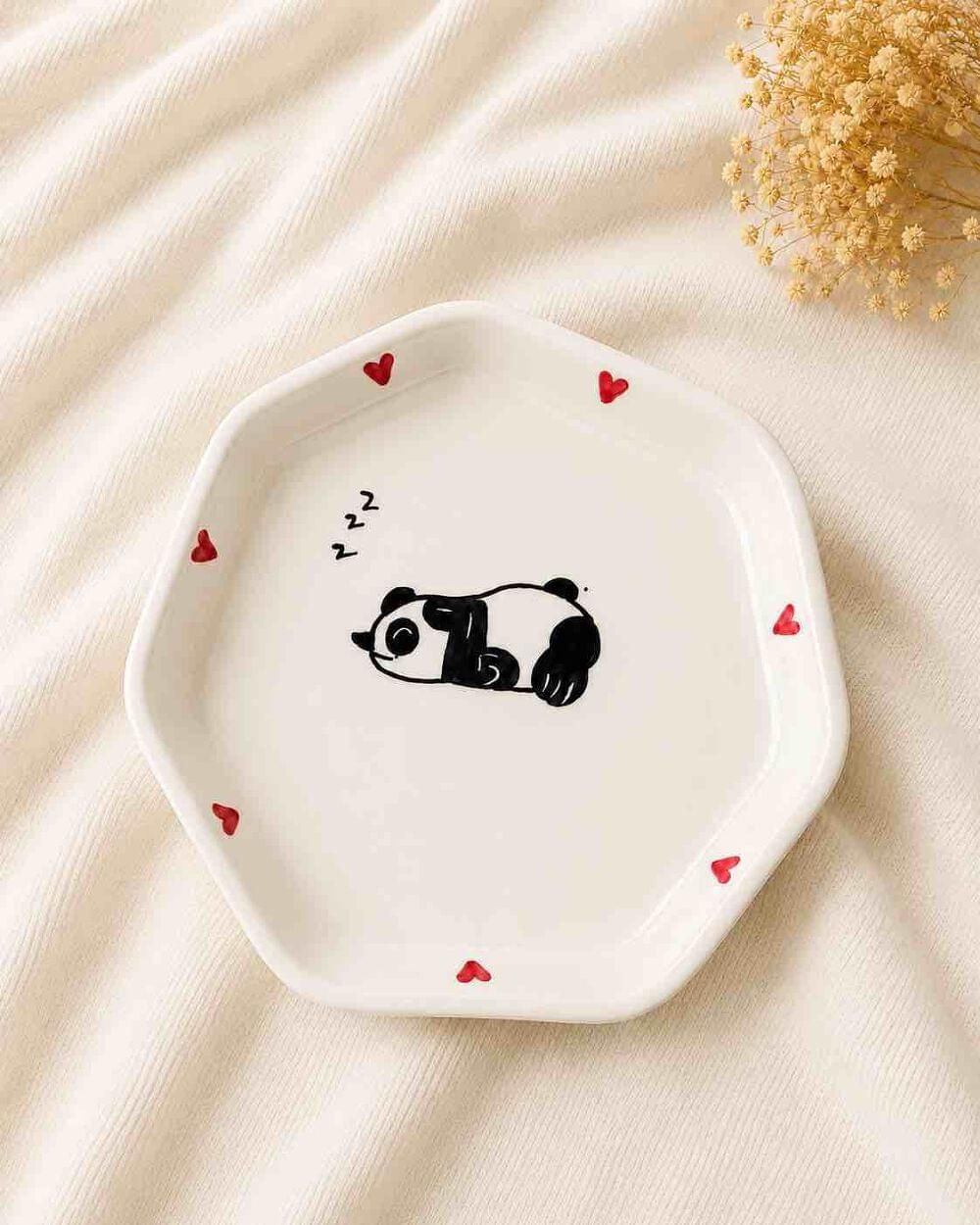
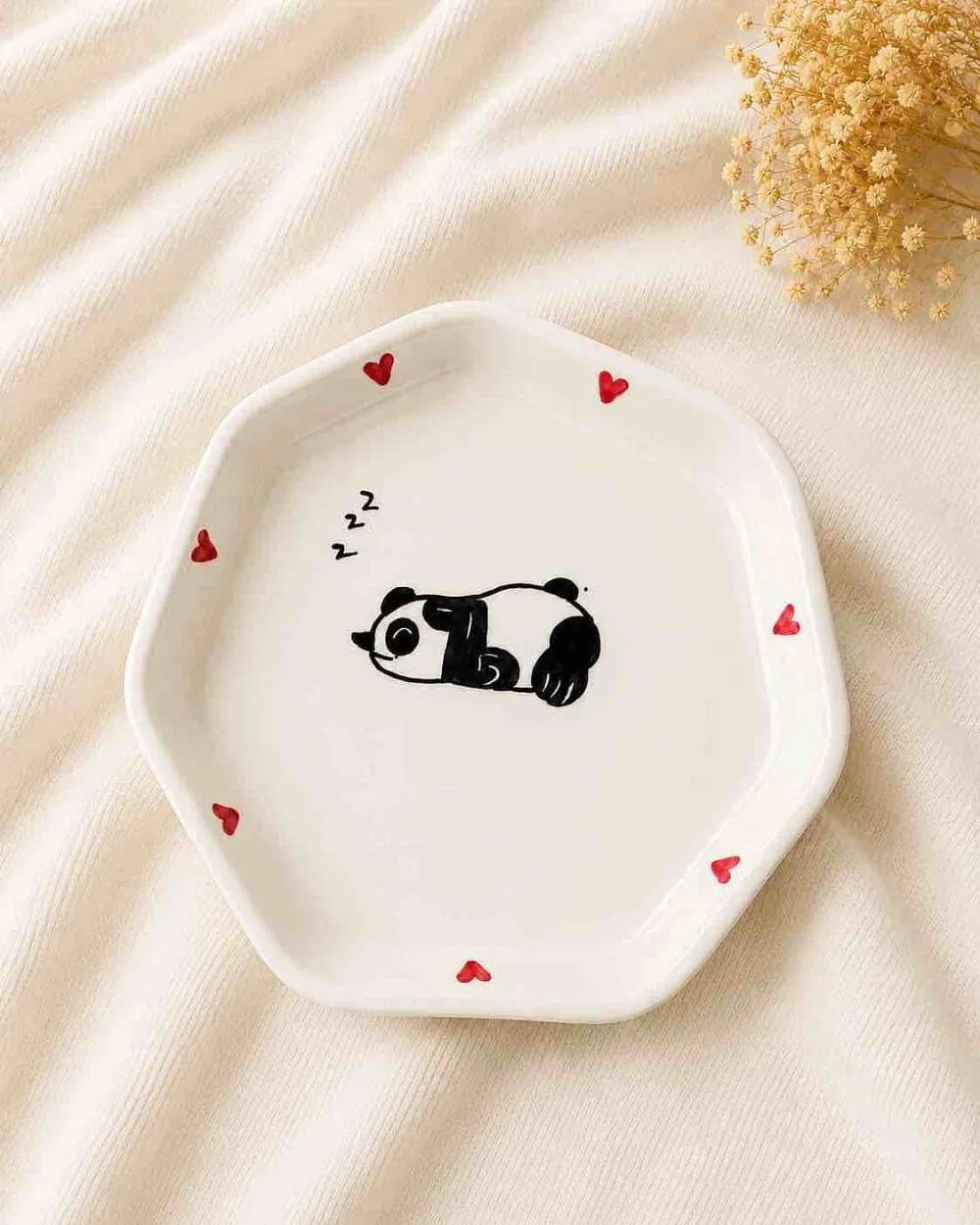 Tulips in a garden grid, and a panda asleep in the middle of a plate.